
Give every resident the same case. Then let them repeat it.
Spine surgery training that does not depend on a specimen. Every trainee gets the same pathology, complications to manage, and a second attempt after the miss. In your own room, with your own instruments.
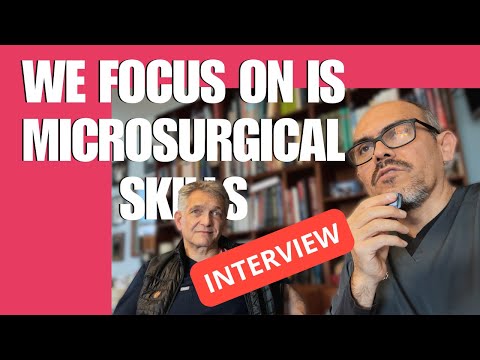
Dr. Härtl on training with RealSpine.
Seven minutes with Dr. Roger Härtl of Weill Cornell Medicine on minimally invasive spine training with RealSpine models. His words, not ours.
What a program does with itCadaver training gives each resident one case, on a different spine.
Specimens are scarce, booked months ahead and gone in an afternoon. No two match, so no two residents work the same case. The resident who missed the step waits for the next lab date.
A cartridge changes the arithmetic. Same pathology, every resident, as many attempts as the afternoon allows.
One specimen
One resident, one attempt. The next resident gets a different spine.
One Lumbar Posterior cartridge
Eight herniations and a stenosis. The same pathology for every resident, and a second attempt for the one who missed the step.
Proficiency before the OR. Complications under control. Fair comparison.
The three things a program director asked us for, and the models that do them.
Deliberate practice on the same pathology.
Eight herniations and a stenosis on one lumbar cartridge. ACDF, corpectomy and disc replacement on the cervical anterior model. Lenke 1 and Lenke 3 on the deformity model. Repetition a specimen never allows.
Bleeding that starts on cue and has to be managed.
An integrated vertebral artery on the Cervical Posterior. Endoscopic bleeding management with irrigation running on the Lumbar Posterior. The Fluid Pumping System resets it for the next resident. Decision making trained where a mistake costs nothing.
Two residents, one case, your rubric.
Two residents on two specimens cannot be compared. Two residents on the same L4 to L5 stenosis can. RealSpine supplies the identical case; your faculty supplies the assessment. RealImaging adds the image guided view without a dose.
One owns the curriculum. One owns the budget.
The page is written for both. Forward it to the other one.
Reliable access to repeatable pathology, complications included, on your own calendar.
- The same herniation, stenosis or curve for every resident, so the curriculum is standard and the comparison is fair
- Active bleeding, spinal cord and nerve roots in the field; decisions trained before they are made on a patient
- Surgeons in New York and Seoul have operated on it and said so in their own words, below
- Runs on a Tuesday at 4 pm in your own room, with your instruments, your C arm or RealImaging
A training purchase that runs in your own room and needs nothing sourced, stored or disposed of.
- Buy the platform once, add cartridges, modules and pathologies as the program grows
- No specimen procurement, no biohazard handling, no disposal, no lab facility to book
- Used with the instruments and imaging the hospital already owns
- Utilization has a named owner: the program director who asked for it, on the program's own schedule
Surgeons who have operated on it.
RealSpine is an excellent training model. It feels like operating a real patient.
 Dr. Roger HärtlWeill Cornell Medicine, New York
RealSpine is such an excellent model, especially for training and education of spine surgery. This is expected to significantly ease the hassle of the expensive cadaver course for minimally invasive spine surgery, especially in the endoscopic field.
 Prof. Dr. Jin-Sung Luke KimDirector of Minimally Invasive and Endoscopic Spine Surgery, Department of Neurosurgery, Seoul St. Mary's Hospital, The Catholic University of Korea
Three steps from the first call to the first cohort.
Thirty minutes with Greg
In person or online. The case your program teaches most, on the cartridge built for it, with your instruments.
A resident session in your room
Before the committee meets, Realists sends models to your program for testing, or comes to you. Your faculty, your rubric, your room.
Platform once, cartridges per rotation
Buy the platform once, then add the cartridges and pathologies the curriculum needs, on the same base.
Book a demo and put two residents on the same stenosis.
Thirty minutes with Greg Rhinehart, in person at your site or online. He replies with available times and brings the platform.
What you buy once, and what you add.
No prices here. The shape of the purchase, so the committee knows what it is looking at.
The platform, once
A RealSpine base with the Fluid Pumping System, bought or rented. One line the department initiates and management funds. No lab facility to book.
Cartridges per rotation
Add the cases the curriculum teaches: a Lumbar Posterior for decompression, a Cervical Posterior for the vertebral artery. The same cartridge runs for every resident in the rotation.
Your room, your instruments
Runs on the instruments and imaging the hospital already owns. X ray and navigation compatible. RealImaging for the rooms without a C arm.
Support from Realists USA
Greg prepares the committee packet with you: what is bought, who owns utilization, how often it runs. Product and engineering in Leipzig.
Six questions, answered straight.
Is the tactile feel credible enough for fellows?
Ask the surgeons who have operated on it. Dr. Roger Härtl of Weill Cornell says it feels like operating a real patient, and he says more in the video above. Then put your own fellows on it at the demo.
Does this translate to OR performance?
Realists does not publish outcome data on its trainees and we will not claim it here. What changes is structural: every resident gets the same case, before the live case, and again after the miss. Your program measures the rest, on your rubric.
Who pays for it, and is this discretionary spend?
The department usually initiates and hospital management funds it. The purchase is the platform once, then cartridges as the program grows; the steps are laid out above. Greg prepares the committee packet with you.
Can we integrate this into our program?
In your own room, on your own instruments, on a Tuesday at 4 pm if that is when you have the residents. RealImaging when you have no C arm.
How do we compare learners objectively?
By giving them the same case. Two residents on two specimens are not comparable; two residents on the same L4 to L5 herniation are. RealSpine supplies the identical pathology; your program supplies the assessment.
What is the total cost of ownership?
We do not publish pricing on the site. Greg walks procurement through what is bought once, what is added per cartridge and how support works, so the number in the value analysis is a real one.
Same case. Every resident. Second attempt included.
Book a demo in your own room, with your own residents and your own instruments.
Book a Demo