
One spine model, occiput to sacrum. Built for robots, navigation and long constructs.
The full spine in true anatomical dimensions. RealSpine Full Modular runs from the external occipital protuberance to the sacrum, with 20 intervertebral discs, the cord and the nerve roots, and it is engineered for robotic and image guided workflows. Three spans that each work on their own, two bone options, your instruments.
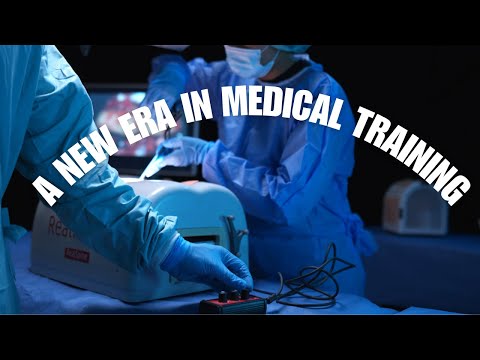
What a full spine changes in a training room.
Realists' film on how simulation is changing surgical training. Four minutes, then the three configurations below.
Choose a configurationPick the span you instrument. Each module works on its own.
Same anatomy, three spans. A program that needs only the thoracic spine buys only the thoracic module, with no other module required. Add a span later if the curriculum grows.
RealSpine Full Modular
The entire spine, from the external occipital protuberance to the sacrum. Flexible bones or fixed bones.
Thoracolumbar SI Modular
Thoracic and lumbar spine down to the sacroiliac joint, for thoracolumbar constructs.
Lumbar SI Modular
Lumbar spine to the sacroiliac joint, for lumbosacral and SI work on the modular platform.
Pathologies on the Full Modular are configured on request. Tell Greg the case. Lateral approaches are possible on the modular model as well.
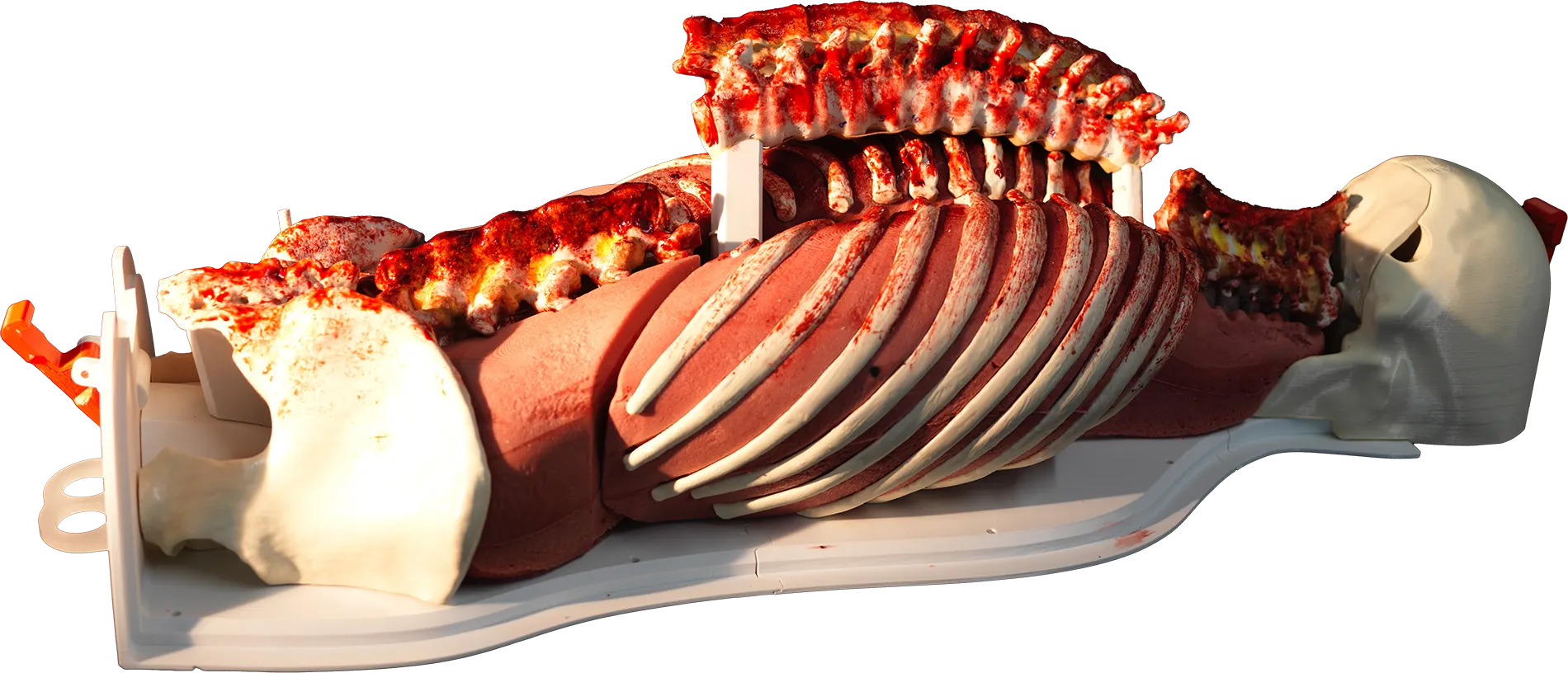
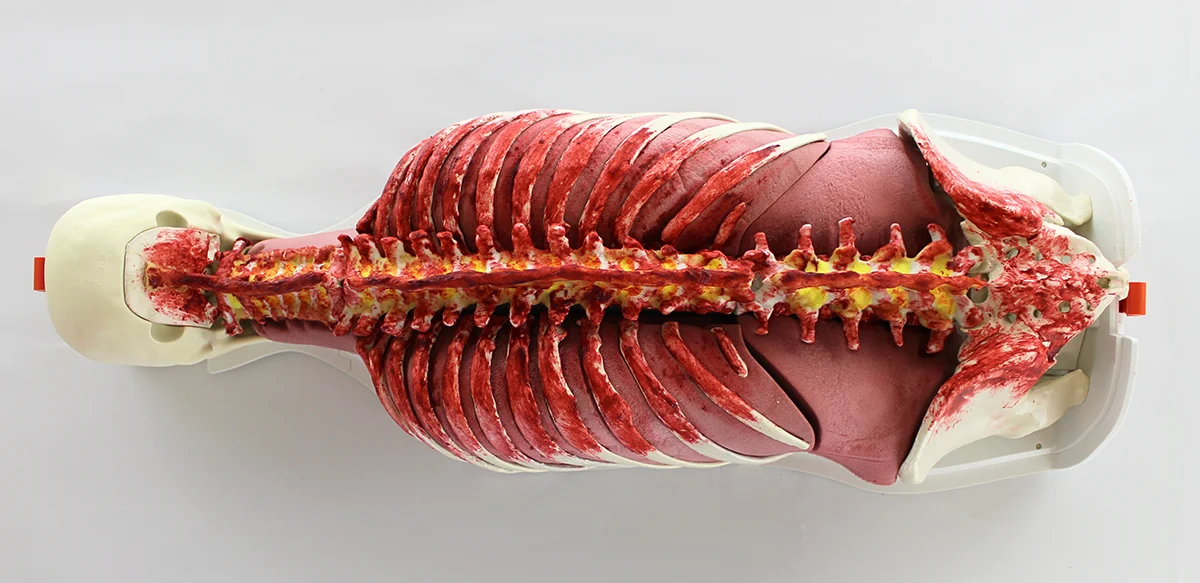
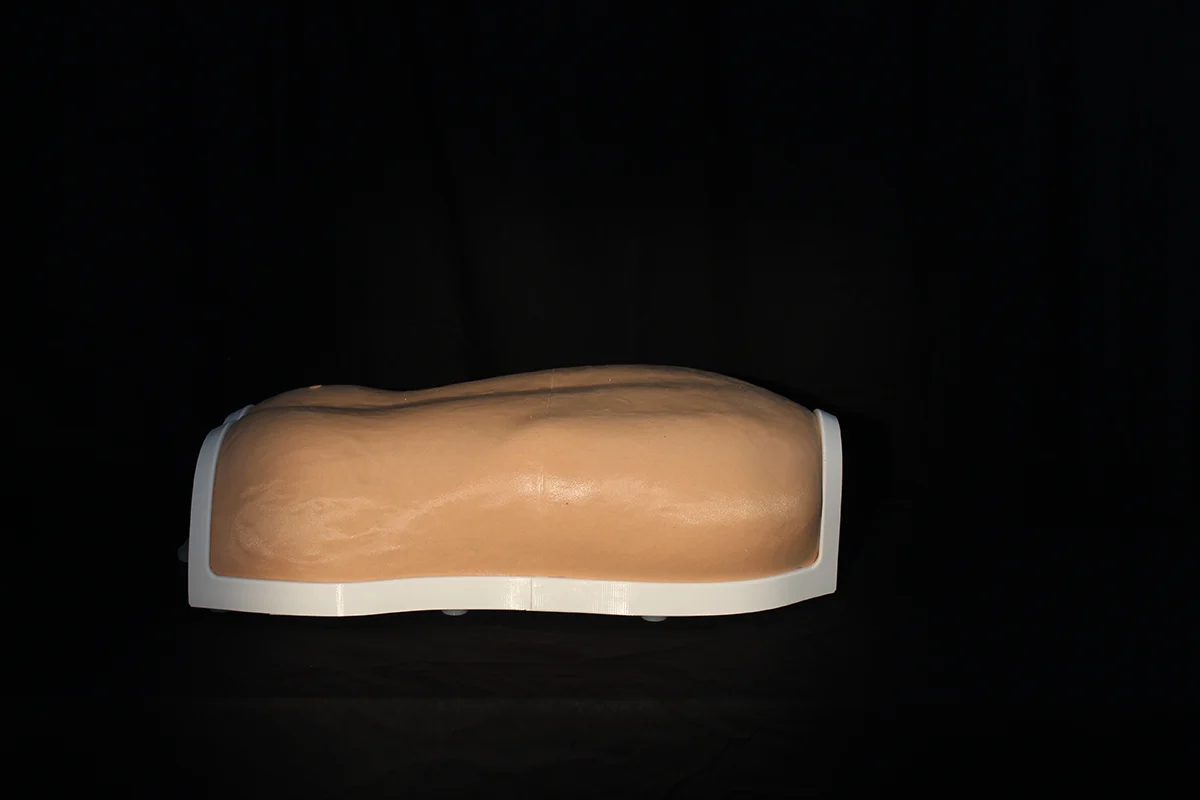
What is on the table.
- Levels
- Full Modular EOP to sacrum. Thoracolumbar SI Modular TH1 to SI. Lumbar SI Modular L1 to SI
- Anatomy
- Vertebrae and 20 intervertebral discs (5 cervical, 11 thoracic, 4 lumbar), spinal cord and nerve roots, ligamentum flavum, interspinal and posterior longitudinal ligaments, capsular ligaments of the facet joints. True anatomical dimensions
- Procedures
- TLIF, PLIF, LLIF, screw fixation, flavectomies and facetectomies, robotic assisted spine surgery, navigation, multi level instrumentation
- Approaches
- Posterior and lateral approaches. Modular platform for navigation and robotics
- Pathology
- Configured on request
- Navigation
- One preoperative DICOM data set registers the whole model. Production precision is guaranteed, so no per model scan is needed
- Works with
- Robotics, X ray and fluoroscopy, drilling and screws, external navigation, TLIF, PLIF and LLIF cages
- Parts
- Full Modular with flexible bones PRO369. Full Modular with fixed bones PRO413. Thoracolumbar SI Modular PRO380. Lumbar SI Modular PRO362
A robot needs a spine that is true to size.
Long constructs, navigated screws and robotic workflows are where a specimen runs out first. This is the model built for them.
Roll out your robot or your navigation on the same spine in every region.
A robotics rollout is a training problem before it is a sales problem. Full Modular gives every rep and every surgeon the same occiput to sacrum anatomy in true dimensions, so registration, planning and the screw path are practiced the same way in Dallas and in Boston.
How OEMs use RealSpineMulti level instrumentation without waiting for a full length specimen.
TLIF, PLIF and LLIF, screw fixation across levels, facetectomies and flavectomies, on a spine that runs from the occiput to the sacrum and comes back for the next resident. Pathologies configured on request for the cases your program teaches.
How programs use RealSpineFull Modular is one product. The cervical, lumbar and deformity models are others.
Four separate product lines in one RealSpine family, each complete on its own. Cervical procedures such as ACDF run on the cervical models, not on the modular spine. Pick the line your program trains on.
Anterior and posterior
ACDF, corpectomy and disc replacement in front. Decompression with active bleeding at the back.
Cervical modelsThree ways in
Eight herniations and a stenosis, ALIF, OLIF and LLIF access, ATP and transpsoas.
Lumbar modelsYou are here
Occiput to sacrum, robotics and navigation, multi level constructs.
Back to topLenke 1, Lenke 3, patient specific
Deformity has its own line, with models configured from preoperative imaging.
Deformity modelsAdd RealImaging for real time, radiation free visualization when the C arm is not in the room.
Bring the robot. Book a demo on the Full Modular simulator.
Thirty minutes with Greg Rhinehart, in person at your site or online. He replies with available times and brings the platform.
Questions we get about the Full Modular.
Does the Full Modular work with our robot?
It is built for it. Realists lists robotics, external navigation, X ray and fluoroscopy as compatible technology. Bring the robot or the navigation system to the demo.
Full Modular, Thoracolumbar SI or Lumbar SI, which one?
Pick the span you instrument. Full Modular runs from the occiput to the sacrum. Thoracolumbar SI Modular runs from TH1 to the sacroiliac joint. Lumbar SI Modular runs from L1 to the sacroiliac joint. Each module works on its own, so a program that only needs one span buys only that one.
Flexible bones or fixed bones?
Flexible bones replicate the motion of a real spine, for constructs and reduction work. Fixed bones hold a stable position for precise navigation and robotics demonstrations. Full Modular comes in both: flexible as PRO369, fixed as PRO413.
Do we need to scan every model for navigation?
No. One preoperative DICOM data set is enough, because every Full Modular is produced to the same guaranteed precision. Register once and run the navigation or the robot on the model.
Can we get a specific pathology on it?
Pathologies on the Full Modular are configured on request. Tell Greg the case and he will confirm what Realists can build.
Which cages and screws can we use?
TLIF, PLIF and LLIF cages, drilling and screws, with your instruments. Multi level constructs are what the platform is for.
Bring the robot. We bring the spine.
Full Modular demos run with your navigation or your robot when you have one in the room.
Book a Demo